

This article is purely based on my understanding of Components and the outcome of my dirty hands. Reference of this Article is “MySQL official documents” & my experience with components.
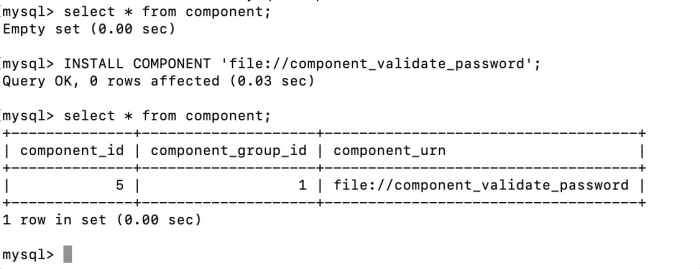
Oracle introduced Components in MySQL 8.0 and user can locate its table under mysql database. See below figure.

What is a component and why we need it ??
Components are similar to the Plugins but are more secure and provides improved & additional features. Moreover plugins will be deprecated in future versions.
If we want “audit logs” to be enable or have strong password mechanism, a user need to install respective plugins. But there are few challenges :
1. Plugins can interact only with server but not with each other which limits its usage.
2. Plugins interact directly with server components which means they are not encapsulated .
3. While installing plugins a user needs to mention the extension file name as well. For example .so or .dll
These are some of the over head or disadvantage of plugins which a DBA normally face. I remember once I required to install an “audit” plugin and being on linux platform , it requires a “.so” file . So in this case I made ensure that I should have “.so” extension plugin .
But components remove above mentioned challenges. Components are more secure as it is encapsulated and provides defined set of services. Major advantages are :
1. Components can interact each other.
2. With components DBA doesn’t need to worry about remembering the extension file name. For example while installing “validate password” component user can simply install it as shown in below picture post which a user can check whether component has been successfully installed . Additionally we can uninstall if not required.
3. A user can create his own plugins using existing macros . Some of the header for this component are as follows :
#include “validate_password_imp.h“
#include <assert.h>
#include <string.h>
#include <algorithm>
#include <atomic>
#include <fstream>
#include <iomanip>
#include <set>
#include <sstream>
#include “mysql/components/library_mysys/my_memory.h“
#include “mysql/components/services/mysql_rwlock.h“
#include “mysql/components/services/psi_memory.h“
#include “mysqld_error.h”
Respective macros can be found from MySQL distribution code
3.a After this, copy any macros of existing components and get the basic framework ready.
3.b Copy any of the service ( header file) and compile it using the source distribution of the MySQL server.
Currently below plugins are available to use. At the current moment not all components are available and thus plugins can be used in place but in future, plugins will be completely removed.
- Error logging
- Audit Messaging and logs
- MySQL Enterprise Data Masking and De-Identification Password Validation
- MySQL Enterprise Firewall
- Plugin API
- Thread Pool
- Version Tokens
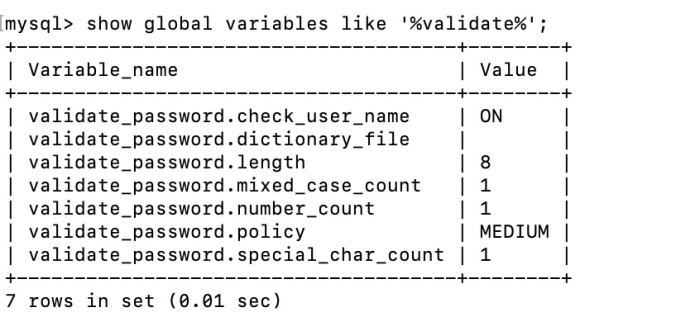
Once enable, user can see the respective variables using “show global variables” .
Such variables starts with prefix “component name”. For example in “validate_password” , below are the variables which will be visible once user enable this component :
What about “Audit log” component & how it is useful ??.
There are various cases when application need to append some specific string in audit logs. In such case we can use an UDF which is known as “audit_api_message_emit_udf()”.
- First install “audit log” component in similar manner which we used to install validate password component:

2. Now we wanna check if we can add some message to the audit log:
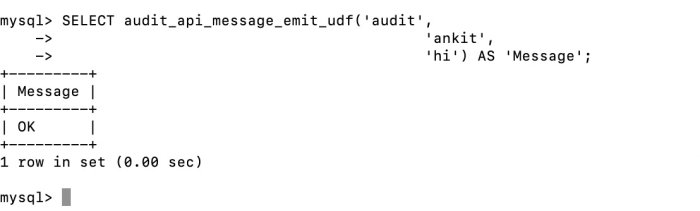
If the required arguments has been passed, we will receive OK message which means that it is a success..This link provide argument required for this UDF
Hence stating this we have other components too, we can make our own also and in future it will replace the plugins. Moreover if are using plugins these days and planning to work on MySQL 8 , then you have to remove plugins as it will be going to remove in future.
 SimplifieDB
You must be logged in to post a comment.